 |
In our neighboring crossroads cemetery, a weathered limestone
maiden, missing an arm, maintains her perch atop a stone pedestal. She surveys
the blaze of sugar maples, late but resplendent in their color this year.
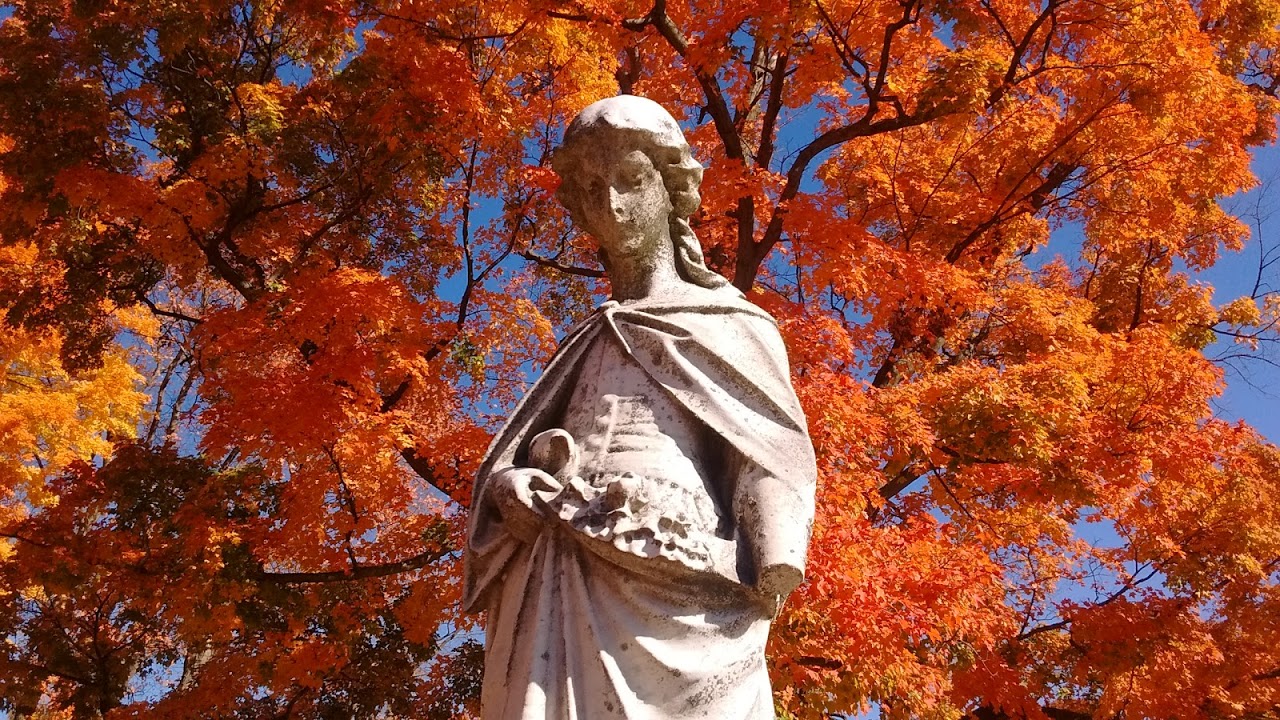
In just a few days, the shortening days and lengthening rays
of autumn light have drastically changed the colors in the scenery all around
her. Her stone countenance, impassive, takes it all in.
Having surveyed this crossroads plot of gravestones and
maple trees for decades, I imagine our stony maiden has gained enough wisdom to
avoid declaring this year’s fall color better than that of any other.
 |
| October 5, 2015: Aromella vines in the South Vineyard begin to display their varietal fall color. |
I have only tended the vines in the neighboring vineyard for
half a decade.
But in those years of watching the seasons unfurl and then retract,
I have absorbed the deep seasonal rhythms of this fixed spot on the globe. I have
learned that no one season is like any other, and comparisons between them are
hard to make.
Through every season, we observe and record sequences:
 |
| October 15, 2015: sweetgum branch against marsh reeds |
In the spring, we anxiously record for our phenology log when
the wild plants on our farm break bud and then set flower. The first to emerge,
melting a hole through the snow covering them, are the skunk cabbages, arising steamily
in the marsh with an aroma of carrion to entice flies and wasps, the season’s
first pollinators.
 |
| October 19, 2015: late ripening apples in the orchard |
Months later come the apple blossoms, wafting a sweet scent
across the orchard to attract the honeybees.
Although the sequence remains largely the same, the calendar
dates of when plants choose to leaf out and then blossom varies from year to
year, as does the exact overlap of when various species are in simultaneous
bloom.
In a year when many things bloom
together in a flowery riot, it is easy to declare that it is the best spring ever.
But then comes a season when blossoms are more evenly
spaced, the season’s flowering more staggered. The staggered season is perfect
in its own way: a chance for us to appreciate each flower, a chance for the
honey bees to enjoy a more consistent diet of varied nectar.
Once summer arrives in the vineyard, it is the rainfall and accumulation of
growing degree days that we observe and record.
 |
| Newly furrowed vineyard rows in North Vineyard, couched by October frost. |
The flavor of the grapes we harvest are a record of the heat
and relative wetness of the summer that ripened them.
In our minds, there is always a perfect ideal for the balance
of sweetness, acidity, and juiciness that we hope the ripe fruit will attain.
 |
| Frontenac Gris block, North Vineyard: early leaf fall this year. |
But no growing season is like any other.
The humans who tend the vines can do some things to subtly
affect ripening: we can pull more or fewer leaves from the green buckshot berries
to encourage and speed ripening, we can limit the size of the crop to condense
the plant’s energies into fewer, more flavorful clusters.
But what happens on the vines is largely a product of the
season, and the effect of our human efforts, subtle.
Like the stone-faced cemetery maiden, we learn to regard
each season, and each vintage, as its own perfection: it is what the earth
yielded.
We may prefer an autumn when the Virginia creeper, the sweetgums, and the sassafras all blaze together.
But some years the season chooses to color each one on its
own schedule.
 |
| Sassafras foliage along North Vineyard, dispalying varietal leaf shape variation. |
And so in the vineyard, in the last days of October, we find
ourselves in the season of senescence, when this summer’s green and rampant
shoots finish hardening and maturing into next season’s fruiting canes.
 |
| South Vineyard, October 24, 2015 |
Last year, the grapevines luxuriated in a lazy, lengthy cane
ripening season: our vineyard was striped with each variety achieving its fall
color in its own sweet time, the leaves fully maturing, then falling to the
ground.
 |
| Frosty vineyard roses, October 20, 2015 |
This season’s foliage color and cane ripening was more
condensed: a hard frost on the morning of October 20th kissed the
vineyard roses, and before the afternoon was over, green and golden grape leaves
that were frost crusted at sunrise were brittle and brown, hastening the dormancy
of the canes, signaling the end of the growing season.
 |
| October 20, 2015: Morning sun melts frosted grape foliage. By afternoon, the leaves will shrivel and shed. |
As perennial woody plants, our vines accumulate the events
of each season. Next year’s vintage will be a record of not one season, but all
those the plant endured before it.
We watch.
We record.
We hope to gain the patience, and the wisdom, of the
weathered cemetery maiden.


On a radiant October afternoon, slanting autumn sunlight
colors the lake a deep blue and reflects the crimson of maples, the golden
orange of sweet gum, lingering despite a recent storm.

Our swans, sturdy swimmers, struggle to remain upright as remnants of a tropical storm whip the usually tranquil waters into choppy peaks.
The lake is full to the brim with fresh rainwater, and with the emergence of welcome afternoon sunshine, the swans dive and splash extravagantly, exhibiting what to my eye seems something like gratitude, for this day, for this season, for this final blaze of autumn glory, before the next season unfolds, with whatever it may bring.


