 |
| May 6, 2014: First apple blossoms in the orchard, three days before vineyard bud burst. |
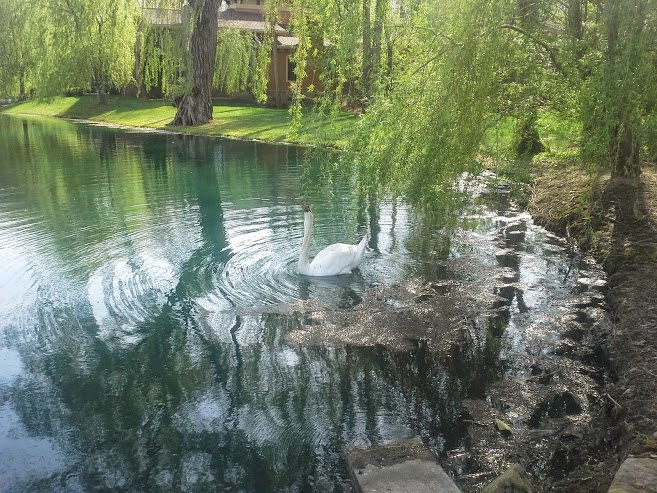
I try to keep this blog close to target, talking about grapes and viticulture (with occasional diversions into swan husbandry and the way snow looks in different permutations of winter sky.)
So bear with me a bit today if it seems like I'm rambling...but it all circles back to what is going on in the vineyard right now, the season of the vineyard with the appropriately explosive name: Bud Burst!
One of the wisest women I ever knew, was Mrs. Jane Reynolds.
She was my third grade teacher at Gordon M. DeWitt Elementary School in Cuyahoga Falls, Ohio.
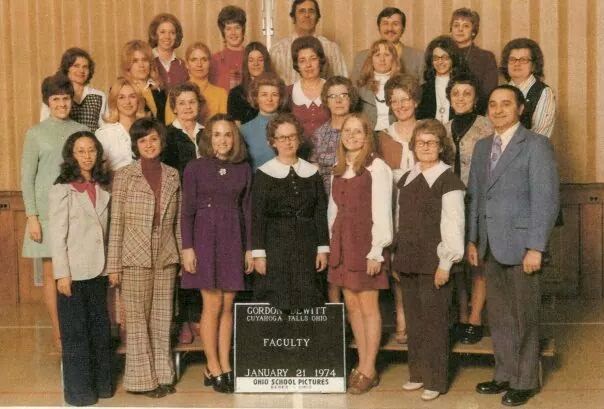 |
| DeWitt School faculty, 1974. Mrs. Reynolds, second from right, front row. |
She passed away several weeks ago at the age of 97, after a long and purposeful life.
Although my calculations may be way off (since I was barely four feet tall at the time) I am pretty sure she wasn't much taller than 5'1", and what a dynamo of energy she was.
(Tongues still wag over an mid-1970's last-week-of-school Field Day, where she jumped into the Tug-Of-War, handing decisive victory to her underdog 3-1 grade class, over Mrs. Villemein's much favored 3-2.)
What I remember about her was not just that she was a fantastic teacher, and that she did all the things the other good teachers did, but that she somehow managed to squeeze into each day, and each class, even more than everyone else did.
Above all, I remember her boundless energy.
In addition to her full-time teaching job, she and her husband, Mr. R. O. Reynolds, the retired band director at the high school, had recently moved to and were restoring her ancestral family farm.
(I learned from her obituary that her great-great grandfather had
walked from New Hampshire to Ohio to stake a claim on the Western Reserve, and that was the farm she and her husband were restoring.)
Whatever was going on on the farm in a particular season, she would bound into the classroom with examples to show off: The first puffy pussy willow buds of the season. The first drips from the maple buckets during sugaring days. Branches of crabapple in full bloom. The season's first chirpy fluff chicks.
So, for several weeks now, I have been hauling my vase of grape canes around, showing off to anyone who will listen the magic of the buds unfurling, the abundant life inside each inauspicious hard scaly brown bud, which needs just warmth, sunshine and water to unleash abundant green life stored within.
And now that season we had been forcing indoors under hothouse conditions is happening spontaneously in the vineyard acres around us.
May 9, 2014: Ladies and gentlemen, we have achieved BUD BURST.
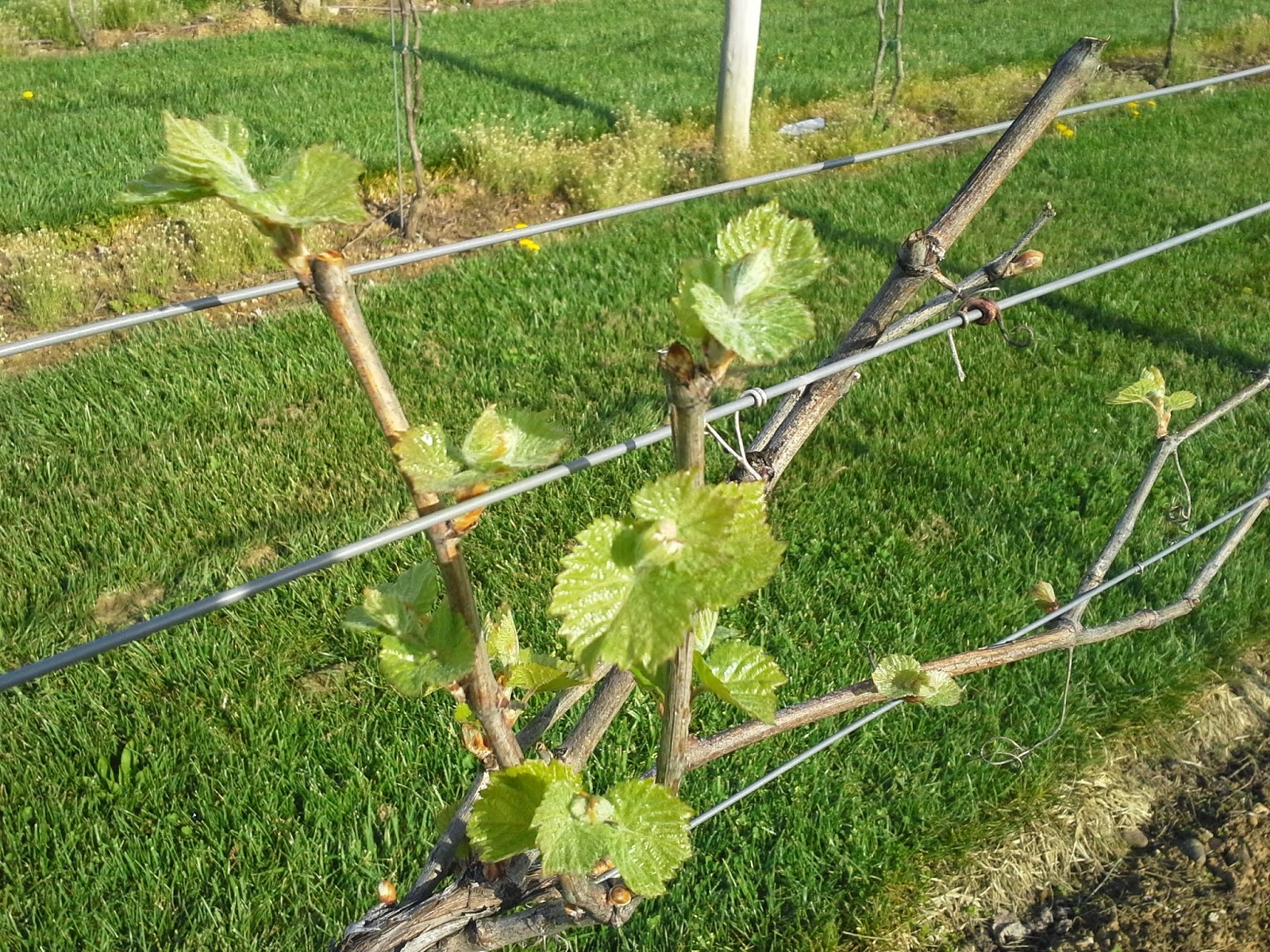 |
| May 9, 2014: First leaf on the Marquette vines, North Vineyard |
After months of work amongst dormant grape canes, and then weeks surrounded by fragile swelling buds, we now see the first green grape leaves of the season.
And what a welcome sight.
It's a day we have been anticipating: each day since the soil started warming (ever so slowly this year), we have been scouting our fifty five acres as we pass through them each day, and making note of what is in bloom, as well as which of our resident vineyard birds are hatching.
The goal is establishing a
phenology log, to help us better understand the specific characteristics of the six grape varieties we grow, and to understand the nuance of how they perform in our micro climate.
Among other things, we want to be able to accurately predict the date of bud burst for each variety in our specific vineyard terrain.
And so, here it is: some highlights from the chronicle of what bloomed, and when, here on our historic farm, in this most unusual spring:
April 1: Skunk cabbage in the marsh sends up spears
April 1: First crocuses bloom at the Vineyard Office
April 13: Norway maple seeds sprouting
April 14: Forsythia in bloom
April 14: Daffodils bloom at the Farmhouse
April 14: Cornelian dogwwood blossoms at the Marketplace
April 14: Periwinkle at the Villas
April 15: Vineyard ducks lay their first eggs
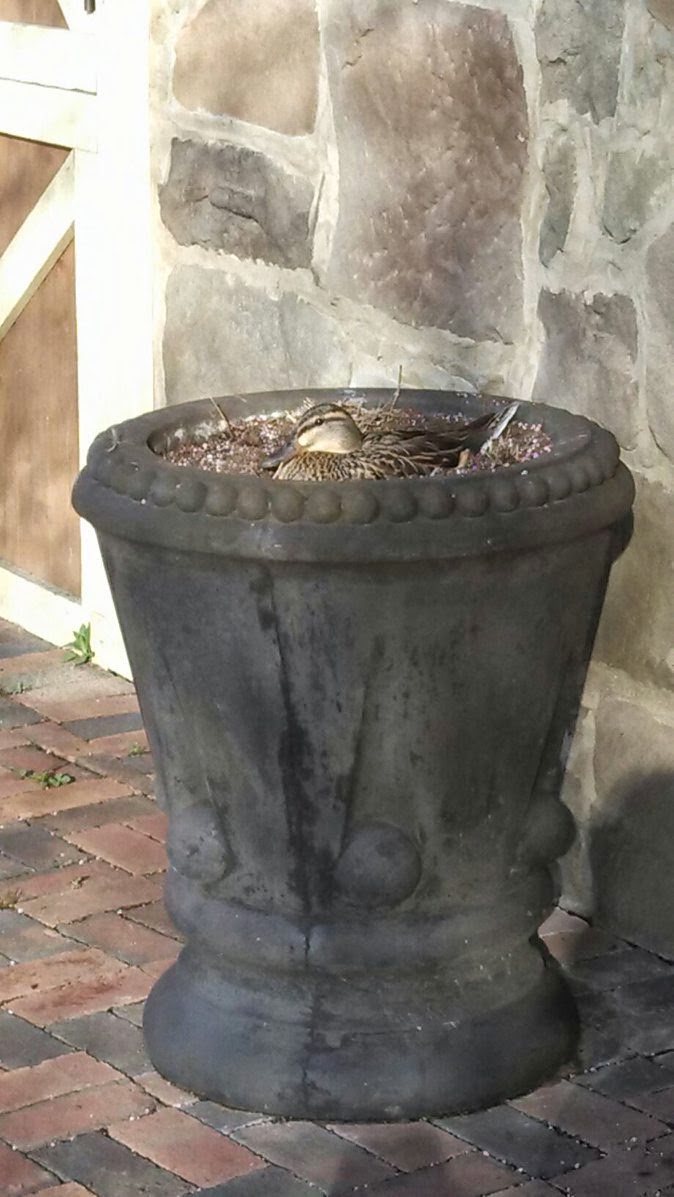 |
| Female mallard tends her eggs in a vineyard flower pot. |
April 17: Privet and multiflora rose leaf out in the hedge rows
April 18: Red maple bud burst
April 21: Weeping willow
catkins
April 27: Bartlett pear blossoms in orchard
April 29: First dogwood bracts
April 21: Vineyard killdeer lay eggs in North Vineyard
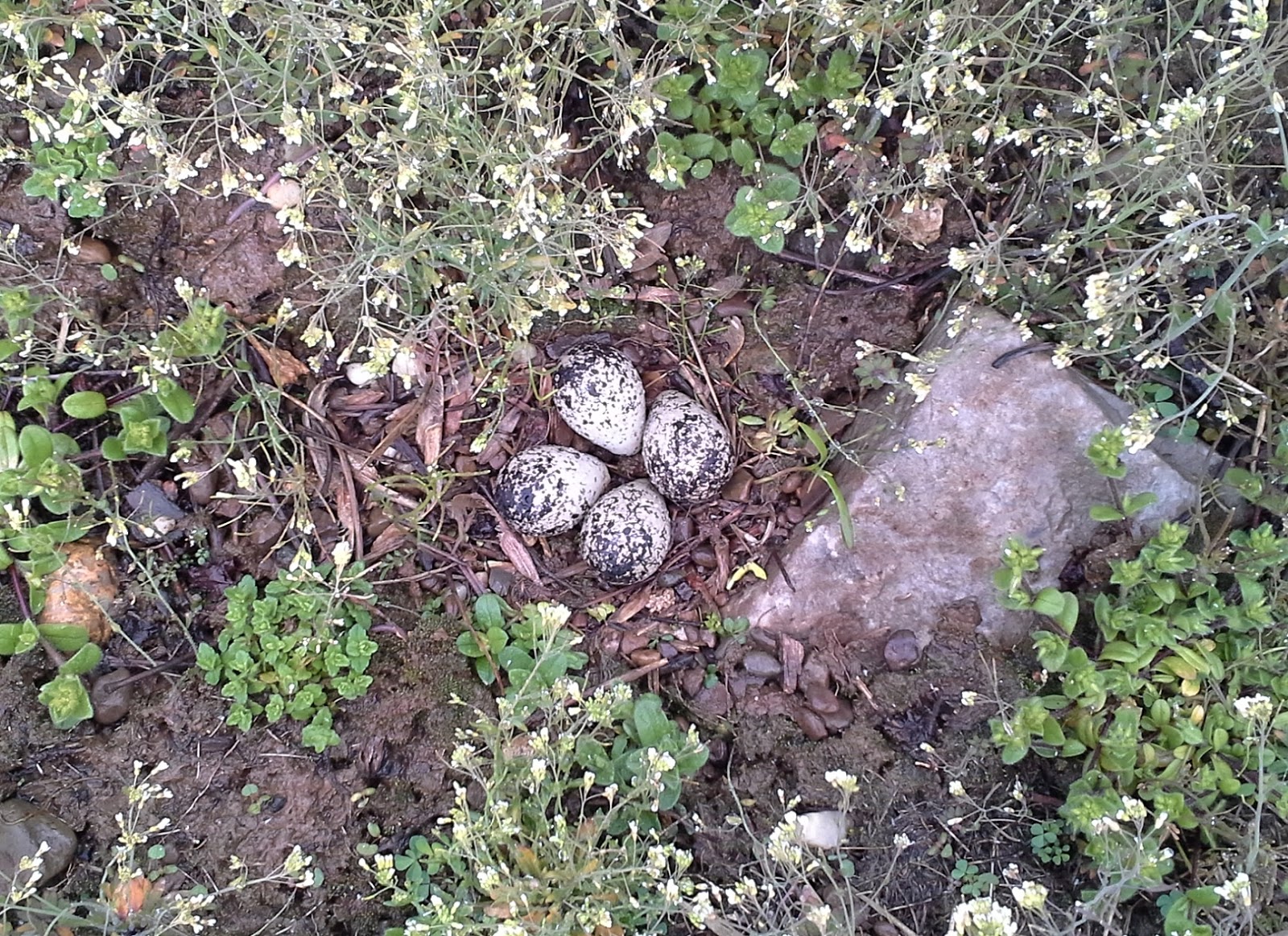 |
| Speckled Killdeer eggs beneath the Frontenac Gris |
May 1: Full dandelion bloom
May 2: Tulips at Carriage House
May 6: Red maple leaf out
May 5: Fiddleheads on Farmhouse ferns
May 6: First apple blossoms
May 6: Dogtooth
violets bloom
May 6: Vineyard Killdeer hatch
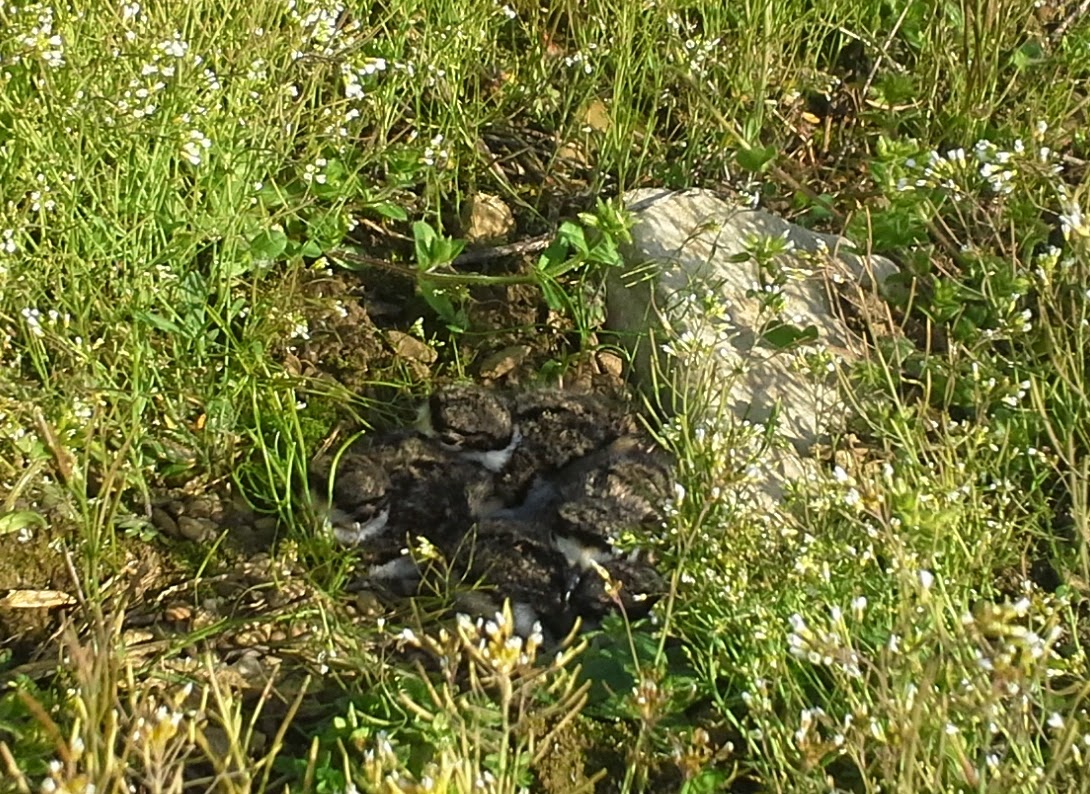 |
| Very well camouflaged Killdeer hatchlings beneath the Frontenac Gris |
May 7: Farmhouse lilacs bloom
May 8: Farmhouse crabapples bloom
May 8: Orchard in full bloom and first leaf out
May 9: Vineyard in full bud burst, with earliest varieties in leaf out
And so, we arrive at the culmination, which seems all the more epic after observing and noting each phenological marker as it occurred.
The vineyard bursts into leaf.
Fifty one days after the vine sap first flowed.
Thirty nine days after the skunk cabbages unfurled steamily from the swamp.
Twenty six days after the forsythia blooms.
Three days after the killdeer hatched.
Which brings us back to Mrs. Reynolds, that wise country schoolteacher, who burst into the classroom each morning with boundless enthusiasm, both for the work before us that day, and what was happening back home at the farm.
It only took me several decades, and almost four years on this farm, to begin to realize the depth of the wisdom she so effortlessly taught us:
Notice the things around you.
Make note of what is blooming each day.
Take care of other living things.
Anticipate what is about to happen.
Appreciate what is occurring right now.
I can't help but think that her infectious energy was absorbed in part from plunging herself so fully into the abundant life of the farm she so loved.
Vineyard phenology wasn't part of the curriculum Mrs. Reynolds was teaching in her Third Grade classroom so long ago. But lo and behold, it was a small part of the life wisdom she so graciously imparted.


.jpg)


